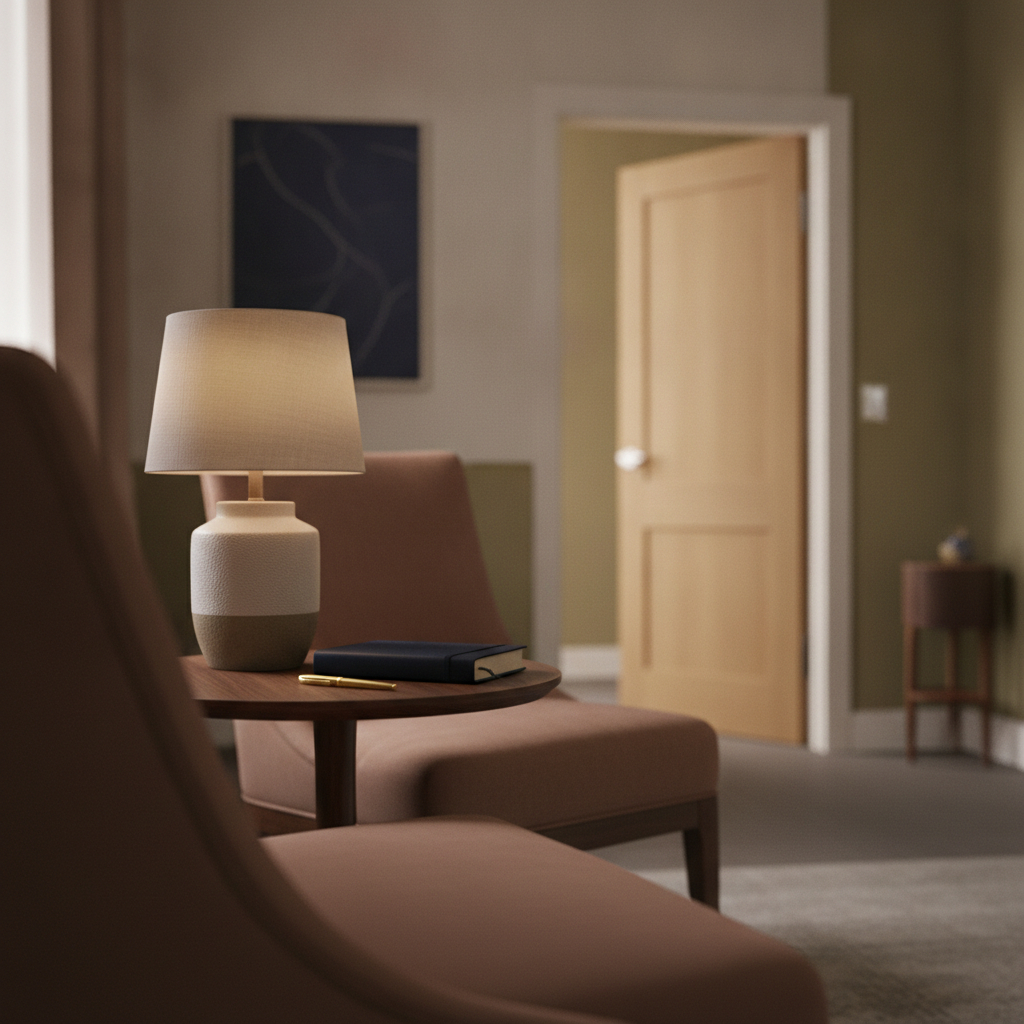
Most Therapy Has Too Many Words
By Dr. John S. Tamerin · 8 min read · April 15, 2026
The stories in my writing are drawn from over fifty years of practice. Names, details, and circumstances have been changed. No real patient is identifiable.

I’ve been practicing psychiatry for fifty-five years, and I’m going to tell you something most therapists won’t say out loud: the most powerful moments in my office are the ones where nobody is talking.
Not the breakthroughs. Not the clever interpretations. Not the perfectly timed question that cracks something open. The silence. The five seconds, ten seconds, thirty seconds where the room goes quiet and something real finally has space to breathe.
Silence is the most underused tool in therapy. And it’s underused for one reason: it terrifies everyone in the room. The patient, obviously. But the therapist too. Silence feels like failure. Like you’re not earning your fee. Like something has gone wrong.
Nothing has gone wrong. Something is finally going right.
The Talking Cure’s Blind Spot
Freud called it the talking cure, and we’ve taken him at his word ever since. Therapy is about talking. The patient talks, the therapist talks, and somewhere in all that language, healing happens.
Except it often doesn’t. Not in the talking, anyway.
We’ve turned therapy into a performance. The patient performs their story. The therapist performs their expertise. The thing that would actually help, sitting still and shutting up, never gets a chance.
I’ve sat in thousands of sessions over fifty-five years, and I can tell you: the moments that change people are almost never the moments when someone is speaking. They’re the gaps. The pauses. The five seconds after a sentence lands where the room holds its breath and something real has a chance to surface.
Most therapists fill those gaps. They rush in with a reflection, a question, an interpretation. They do it because they’re trained to. They do it because silence feels like failure, like you’re not earning your fee if you’re not producing language. And they do it because, if we’re being honest, silence makes them uncomfortable.
It makes everyone uncomfortable. That’s exactly why it matters.
What Silence Actually Does
Here’s something most people don’t know: silence changes your nervous system. Literally. Neurobiological research has shown that periods of silence reduce cortisol, lower blood pressure, and activate the default mode network, the part of the brain responsible for self-reflection, memory consolidation, and creative thought.
In other words, when you stop talking, your brain starts working differently. It shifts from performance mode to processing mode. From broadcasting to receiving. The constant chatter, internal and external, keeps you on the surface. Silence lets you sink.
And sinking, in therapy, is where the real material lives. The things you’ve been covering with words. The feelings you’ve been narrating instead of experiencing. The truths that can’t survive in a room full of noise.
The Five-Second Rule
Here’s something I’ve noticed after decades of practice: most silences in therapy last about five seconds before someone breaks them. Five seconds. That’s all the discomfort most people can tolerate before they fill the space with words.
But something remarkable happens if you can push past that threshold. At five seconds, the patient is uncomfortable. At ten, they start to settle. At fifteen or twenty, something shifts. The mask softens. The performance drops. What’s underneath, the thing they came to therapy to find but have been too busy talking to access, starts to emerge.
Five seconds of silence will tell you more about a patient than fifty minutes of talking. If you can tolerate it.
I’m not talking about hostile silence. I’m not talking about withholding or stonewalling. I’m talking about a warm, attentive, alive silence. The kind where the other person can feel that you’re right there with them, fully present, not going anywhere. Not waiting for them to speak. Not formulating your next question. Just there.
That kind of silence is one of the most generous things you can offer another person. It is shockingly rare, in therapy and everywhere else.
I saw this with a corporate lawyer a few years ago. Early fifties, the kind of person who fills every silence with words. Two months of sessions, every one the same: rapid, articulate, exhausting monologues. He could talk about his feelings without ever actually having one.
One session, he paused mid-sentence. Something caught in his throat. I said nothing. Five seconds. Ten. Fifteen. He opened his mouth to speak and I held up my hand.
Thirty seconds of silence. Then he said, very quietly: “I don’t think my father ever loved me.”
Two previous therapists, years of sessions. He’d never said that sentence out loud. Not because nobody asked the right question. Because nobody gave him enough silence to hear it.
Why Therapists Talk Too Much
Let me say something that won’t make me popular with my colleagues: most therapists talk too much. They over-reflect. They over-interpret. They ask too many questions. They do it for the same reason their patients talk too much: silence feels like a threat.
Think about what silence means to most people. It means something is wrong. Someone is angry. You’ve said the wrong thing. The connection is breaking. We’re hardwired to treat silence as danger, a void that needs to be filled before something bad happens.
Therapists carry the same wiring. When the room goes quiet, the therapist’s anxiety spikes. They think: I should be doing something. I should be helping. If I just sit here, the patient will think I’m incompetent. So they speak. They offer a reflection, pose a question, make a connection. Anything to prove they’re still in the game.
But that impulse, the need to fill the silence, is often the therapist’s anxiety, not the patient’s need. And every time the therapist breaks a silence prematurely, they rob the patient of whatever was about to surface.
Silence as Intimacy
We have the same problem in our relationships. We send texts when we don’t have anything to say. We fill dinner with chatter because quiet feels like distance. We treat every pause in conversation as a problem to be solved.
But here’s what I’ve learned, both as a therapist and as a husband and father: the most intimate moments in any relationship are the quiet ones. Sitting next to someone you love and saying nothing. Holding a space where neither person has to perform. Where you can just be, together, without the pressure of language.
Silence isn’t the absence of connection. It’s the deepest form of it. Because it means you trust the other person enough to stop explaining yourself. You trust that you exist in their mind even when you’re not producing sound.
The constant need to talk is often a fear that without sound, you might cease to exist. Silence teaches you that you’re still here, still connected, even when the words stop.
The Session That Changed My Practice
Early in my career, I was doing what I’d been trained to do. Listening hard. Formulating interpretations. Delivering them with clinical precision. I was a good technician. And I was filling every silence with my own expertise.
It took me years to learn that the silence wasn’t a gap I needed to fill. It was the treatment. My words, careful and well-trained as they were, had been getting in the way of what my patients actually needed: space to hear themselves think.
The Architecture of a Good Session
A good therapy session has architecture, not just words. It has structure, and the structure includes silence. A question, then space. An observation, then quiet. A feeling surfaces, and instead of immediately interpreting it, you let it sit in the room for a moment, like a living thing that needs air.
The meaning isn’t born in the words. It’s born in the quiet moments between them. In the pause after someone says something true. In the breath before they say the thing they’ve never said before. In the five seconds of silence that most therapists can’t tolerate and most patients desperately need.
The best therapy doesn’t sound like a conversation. It sounds like music, full of rests that give the notes their meaning.
An Invitation
If your therapy sessions feel like conversations that never quite land, if you leave feeling talked-out but not changed, consider the possibility that what you need isn’t more words. It might be fewer.
Ask your therapist to sit with you in silence sometime. See what happens. See what surfaces when you stop narrating your experience and start having it. The thing you’ve been trying to say for years might be waiting in the quiet, patient and ready, for a moment when the room is finally still enough to hear it.