My Child Is the Sick One. Why Am I Falling Apart?
By Dr. John S. Tamerin · 6 min read · August 23, 2026
The stories in my writing are drawn from over fifty years of practice. Names, details, and circumstances have been changed. No real patient is identifiable.
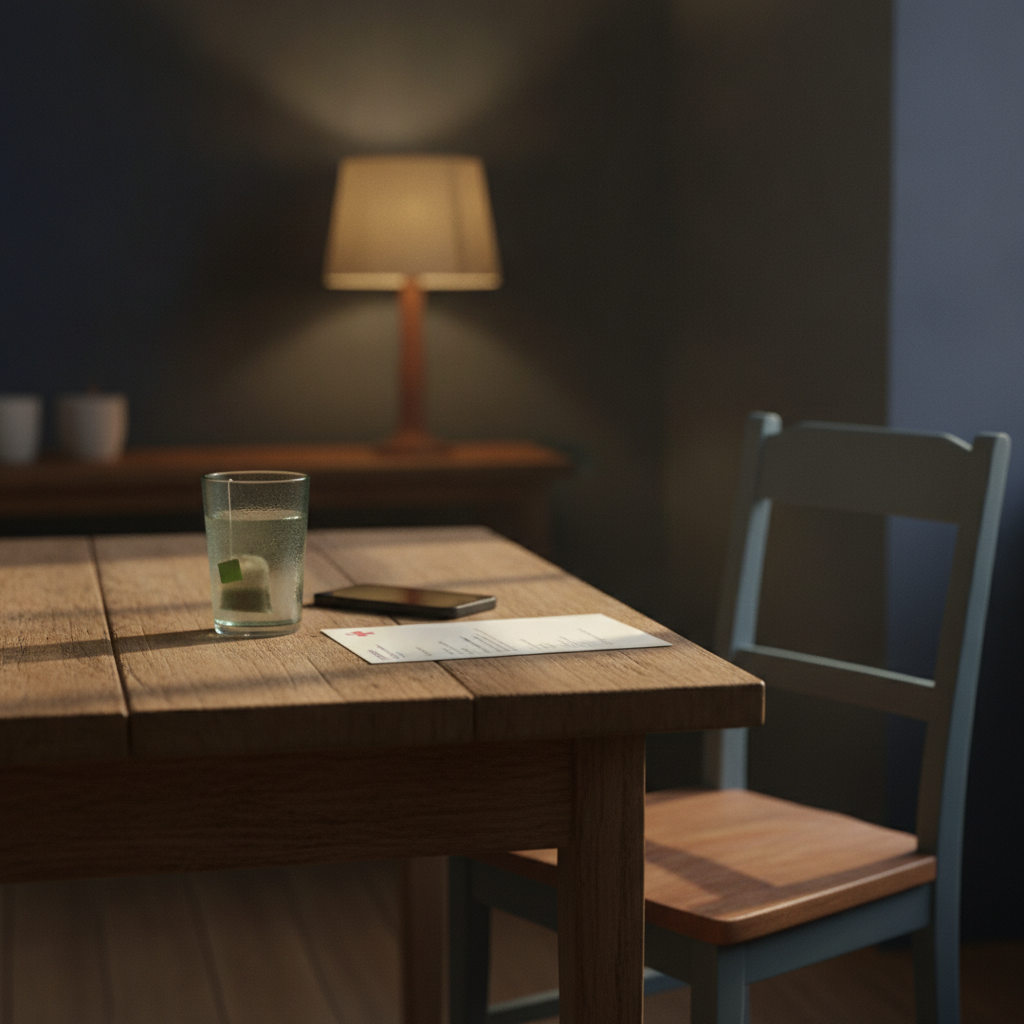
She is upstairs and it is a reasonable evening, and you are sitting in the kitchen unable to move.
Nothing is happening. That is precisely the problem. When something is happening you are excellent, you are calm and organized and you know which number to call. It is the quiet hours that take you apart, because they are the only hours in which you are permitted to notice your own condition.
Then it passes, and tomorrow you will be capable again.
The whole house has an illness
A mother of four described years of her family enduring one of her children suffering what she called the torture of depression and anxiety. She was clear that it was the family who had been merely surviving, not only the child.
This is the thing that gets missed in almost every case I inherit.
One person carries the diagnosis. The illness is distributed across everybody. The family reorganizes itself around the sick child the way a body compensates for a broken ankle, and the compensation is intelligent and necessary and it deforms everything else.
The other children learn that their needs are a size that cannot be accommodated this year, so they stop presenting them, and they become remarkably easy, and everybody says how well they are coping.
The marriage becomes an operations meeting. Two competent people who have not had a conversation about anything other than logistics since the spring.
And you, the one holding it, develop the specific exhaustion of continuous readiness. The work is not what empties you. You have not been genuinely off duty in four years.
The easiest child in a household like yours is rarely the one who is fine. They are usually the one who worked out early that there was no room, and became convenient about it.
Two things I say to parents, and I have said them for fifty-five years
The first is that you did not cause it. I say it plainly and I mean it literally. Severe depression and anxiety in a young person is an illness. It is not a verdict on your parenting, and the guilt you are carrying, which you have probably never voiced, is the single most useless item in the house.
The second is more difficult and it is the one that helps.
You cannot run a household on a person who is not being looked after. Not for four years. Whatever moral position you have taken about putting yourself last will not survive contact with the arithmetic, and when you go down, and you will, the whole compensating structure goes with you.
So getting yourself treated is maintenance on the thing everybody in the house is standing on.
The mother who came in for her sons
A woman brought each of her three sons to me at different points across a good many years. She trusted me with all of them.
Then, in her late fifties, she came for herself. She described it as finally giving herself the gift of doing the work.
I have thought about her phrasing often. She did not say she had finally admitted she needed help. She said gift. After decades of arranging treatment for everybody else, the thing she had withheld was her turn.
She is the most common shape this takes, and the years she spent waiting bought nobody anything. They were simply years.
What actually changes in a house like this
Not the illness, immediately. That has its own course and it is being treated by somebody.
What changes is that the other people in the building start getting something.
The siblings get told, in plain language appropriate to their age, what is actually happening, because children fill silence with worse material than the truth. They get one thing that is theirs and does not get cancelled when there is a crisis.
The marriage gets one conversation a week with a rule that the illness is not the subject. That sounds artificial and it is, and it works, because otherwise the subject consumes everything.
And you get somebody of your own to talk to, who is not your child’s doctor and not your friend who has started to look tired when you begin.
What the first appointment looks like
I will ask about your child, because you need to tell me and because I need to know.
Then I am going to ask about you, and you will find that you deflect back to her within about a minute. I will notice it out loud, gently, and probably more than once, because it is the habit that has kept you upright and it does not put itself down on request.
I will ask about your other children by name and what each of them is like. Parents in your position frequently discover, in that answer, something they had not let themselves see.
An Invitation
If the household has been in survival for years, that can change, and it does not require your child to be well first.
Come and be the patient for an hour. It has been a long time.